Source Hydraulic Steel Plate Straightening Machine for Floor, Wall, Roof
Find 30 hydraulic steel plate straightening machine options with varying thickness capabilities and automatic grades. Compare specifications like leveling width, roller gap adjustment, and voltage to match your metal sheet leveling needs.
Key considerations
Products List


H-Beam Hydraulic Type Straightening Machine
$10000.00 - $20000.00
Moq: 1
Wuxi Datang Welding & Cutting Mechanical Equipment Co., Ltd.


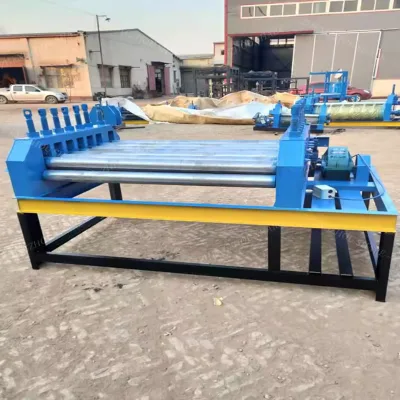


Comprehensive Sourcing Guide
Strategic Sourcing Guide for Hydraulic Steel Plate Straightening Machines
The global demand for precision metal processing equipment has elevated the hydraulic steel plate straightening machine to a critical asset in modern manufacturing. These machines are engineered to correct distortions in metal sheets, bars, and structural components through a combination of mechanical force and hydraulic pressure. For procurement professionals, navigating the market requires a disciplined approach that separates verified product attributes from marketing generalizations. This guide synthesizes available market data to provide a framework for evaluating hydraulic straightening systems, ensuring that procurement decisions are grounded in observable specifications and compliance standards rather than unverified claims.
Technical Specifications and Operational Parameters
When evaluating a hydraulic steel plate straightening machine, the primary focus must be on the machine's ability to handle specific material dimensions and tolerances. The market data indicates a diverse range of production capabilities, with thickness specifications spanning from 1mm to 30mm for general models, while specialized units for heavy-duty applications may handle thicknesses ranging from 6mm to 40mm. This variance necessitates a precise match between the buyer's raw material inventory and the machine's rated leveling width. Available models list rated leveling widths of 450mm, 800mm, 1300mm, and 1600mm, catering to everything from narrow strip processing to wide sheet fabrication.
The transmission method for these units is predominantly electric, often operating on a 380V power supply with a 50Hz frequency, which is standard for industrial environments in many regions. The feeding speed is a critical operational metric, with observed ranges extending from 0 to 10 meters per minute, often featuring adjustable controls to accommodate different material hardness and thickness requirements. The core mechanism relies on a balance roller system, where the roll diameter is a fixed specification, with 63mm being a documented dimension for certain models. The principle of operation involves large deformation correction, utilizing CNC or hydraulic systems to adjust the roller gap with high precision. Buyers should verify that the "Leveled Precision" meets their quality control thresholds, as observed data suggests a tolerance of 0.5mm for specific high-precision units.
Compliance and Certification Verification
In the industrial machinery sector, certification is not merely a formality but a prerequisite for safety and market access. The observed product data confirms the presence of CE certification, with some listings specifying "European CE" or "CE, ISOCCC" compliance. Additionally, ISO certification is frequently cited as a standard attribute for these machines. It is imperative for buyers to treat these certifications as observations of specific listed products rather than universal guarantees for all available inventory. Procurement teams must request valid, current certificates from the supplier for the specific model being purchased.
The "prod_standard" attribute observed in the market includes dimensions such as 1600 * 4 and 4 * 2.5 * 2.3m, which likely refer to the physical footprint or packaging standards rather than international technical standards like ISO 9001. Buyers should not assume that a machine labeled with these dimensions meets all local safety regulations. Instead, the verification process should involve cross-referencing the CE mark with the European Union's Machinery Directive and ensuring that the ISO certification covers the specific manufacturing facility. The absence of a specific supplier name in the data means that the buyer must independently validate the certification holder against the actual manufacturer's identity to prevent fraud or misrepresentation.
Cost Drivers and Pricing Dynamics
The pricing landscape for hydraulic steel plate straightening machines exhibits extreme volatility, with observed ranges spanning from approximately $709.97 to $50,000,000. This vast disparity is not indicative of a single product line but rather reflects the difference between small-scale manual or semi-automatic units and massive, fully automated industrial systems with custom configurations. The "Customization: Available" attribute is a primary cost driver; machines built to specific requirements for unique thicknesses, widths, or automation levels will command a premium over standard off-the-shelf models.
Other factors influencing cost include the "Automatic Grade," with fully automatic systems costing significantly more than semi-automatic or manual variants. The "Weight" of the machine, observed at 20t for certain models, correlates with the robustness of the frame and the power of the hydraulic system, directly impacting material and shipping costs. The "Warranty" period, ranging from 12 to 24 months in the observed data, also affects the total cost of ownership. A longer warranty often implies higher initial pricing but reduces long-term risk. Buyers must analyze the total cost of ownership, including the "Standard Export Package" or "Wooden Box" shipping requirements, rather than focusing solely on the unit price.
Typical Applications and Material Compatibility
Hydraulic straightening machines are versatile tools designed for a wide array of industrial applications. The "Usage" attributes observed include Floor, Wall, and Roof applications, suggesting their role in construction material preparation. More specifically, the machines are utilized for "Metal Sheet Leveling," "Sheet," and "Bar" processing. Specialized models are noted for "H Beam Flange" straightening, indicating their utility in structural steel fabrication. The "Production Material" compatibility includes Iron, Aluminum, and Stainless Steel, requiring the machine to have adjustable parameters to handle the varying yield strengths and elasticity of these metals.
The "Working Type" of CNC or Hydraulic systems allows for precise control over the straightening process, making these machines suitable for high-precision manufacturing sectors such as automotive, aerospace, and heavy machinery. The "Technical Features" highlighted as "High Precision" are essential for applications where flatness is critical, such as in the production of pressure vessels or precision machinery components. Buyers should match the machine's "Correct Thickness" and "Flange Width" capabilities (e.g., 200~1000 mm) to their specific production line requirements to ensure operational efficiency.
Supplier Evaluation and Origin Verification
Identifying a reliable supplier is a complex task given the diversity of the market. The "prod_origin" is frequently listed as Cangzhou or generally as China, with specific factory locations mentioned as Jinan, China. However, these are observations of listed products and should not be taken as a definitive list of all manufacturers. The "Keywords" such as "Mechanical and Hydraulic Straightening Machine" help in searching, but the actual factory location must be verified through site audits or third-party inspections.
The "Product Name" variations, including "Metal Sheet Straightening and Leveling Machine," "Plate Straightening Machine," and "precision leveling machine," indicate that different suppliers may use different nomenclatures for similar equipment. Buyers should focus on the technical specifications rather than the marketing name. The "Customized" attribute suggests that many suppliers offer tailored solutions, which requires a deeper evaluation of the supplier's engineering capabilities. The "prod_packing" being listed as "Standard Export Package" or "Steel Plate" implies that packaging standards vary, and buyers should ensure that the packaging is sufficient to protect the machine during international transit.
Quality Control and Long-Term Procurement Considerations
Ensuring long-term reliability requires a rigorous quality control (QC) strategy. The "Condition" of the machines is listed as "New," but this does not guarantee the quality of components used. Buyers should verify the "Roller Gap Adjustment" mechanism, as CNC adjustments offer higher repeatability than manual systems. The "Feeding Speed" adjustability is another QC point, as inconsistent speeds can lead to uneven straightening or material damage.
For long-term procurement, the "Warranty" terms are critical. With observed warranties of 12 or 24 months, buyers must clarify what is covered, including spare parts and labor. The "Color" of the machine, observed as Red-White, is an aesthetic detail but does not impact performance. However, the "Standard Export Package" should be inspected to ensure it includes all necessary documentation, such as operation manuals and maintenance guides. Buyers should also consider the "Technical Features" like "High Precision" and verify if the machine maintains this precision over time through regular calibration.
Comparative Analysis of Machine Attributes
To facilitate decision-making, the following table summarizes key attributes observed in the market for hydraulic steel plate straightening machines. This comparison highlights the variability in specifications that buyers must navigate.
| Attribute Category | Observed Range / Options | Procurement Verification Point |
|---|---|---|
| Production Thickness | 1-30mm; 6-40mm | Verify max/min thickness for your specific material. |
| Rated Leveling Width | 450mm, 800mm, 1300mm, 1600mm | Match to the widest sheet you process. |
| Certification | CE, ISO, ISOCCC | Request valid certificates for the specific model. |
| Power Supply | 380V, 50Hz (AC) | Confirm compatibility with your facility's power grid. |
| Warranty Period | 12 Months, 24 Months | Clarify coverage scope and exclusions. |
| Working Type | CNC, Hydraulic | Determine automation level required for production. |
| Material Compatibility | Iron, Aluminum, Stainless Steel | Ensure the machine handles your specific alloy. |
| Origin | Cangzhou, Jinan, China | Verify factory location for logistics and audit purposes. |
Final Procurement Recommendations
The acquisition of a hydraulic steel plate straightening machine is a significant capital investment that requires meticulous planning. Buyers must move beyond the surface-level attributes listed in product catalogs and engage in a deep technical review. The observed data provides a baseline, but the final selection must be based on a direct comparison of the machine's capabilities against the buyer's specific production needs. Verification of certifications, validation of factory locations, and clear definition of warranty terms are non-negotiable steps. By adhering to a disciplined evaluation process that prioritizes technical specifications and compliance over marketing claims, procurement professionals can secure equipment that delivers consistent performance and long-term value in their metal processing operations.
FAQs
What certifications do hydraulic steel plate straightening machines have?
These machines commonly hold CE and ISO certifications, with some listings specifying European CE or ISOCCC compliance. Buyers must request valid certificates for the specific model to ensure safety and market access rather than assuming universal coverage.
How is the production thickness range defined for these machines?
General models handle production thicknesses from 1mm to 30mm, while specialized heavy-duty units may process thicknesses between 6mm and 40mm. Selecting the correct machine requires matching these ranges to your specific raw material inventory.
Which rated leveling widths are available for metal sheet processing?
Available models list rated leveling widths of 450mm, 800mm, 1300mm, and 1600mm to accommodate various sheet sizes. Buyers should verify that the selected width matches the widest sheet they intend to process for operational efficiency.
Can these machines be customized for specific production needs?
Customization is available for machines built to specific requirements regarding thickness, width, or automation levels. This flexibility allows for tailored solutions but typically commands a premium over standard off-the-shelf models.
What warranty periods are typically offered for these units?
Observed warranty periods range from 12 months to 24 months depending on the specific supplier and model. A longer warranty often implies higher initial pricing but reduces long-term risk for the buyer.
How is the feeding speed controlled on these machines?
Feeding speeds typically range from 0 to 10 meters per minute and are often adjustable to accommodate different material hardness. CNC or hydraulic systems allow for precise control over the straightening process to ensure quality.
Which materials are compatible with hydraulic steel plate straightening machines?
These machines are compatible with Iron, Aluminum, and Stainless Steel, requiring adjustable parameters for varying yield strengths. Specialized models can also handle H Beam Flange straightening for structural steel fabrication applications.